
September 2026 Updates
There’s been plenty happening across Plimmerton Farm during August, even with winter weather making some parts of the site a little more challenging.
This month we’ve reached an important milestone with the reservoir base pour, the first wastewater tank panels have arrived on site, winter earthworks are continuing where conditions allow, and our planting crews are making their way through this season’s planting programme of 70,000 native plants.
A big day for the reservoir
After the first Pour date was cancelled due to weather, the reservoir base was finally poured the following Saturday morning— and once it started, there was no stopping it.
Concrete began arriving at around 4am on Saturday morning, with two pumps and two placing teams working from opposite sides of the circular foundation. By the time the job was finished, around 400 cubic metres of concrete had gone into the slab, involving roughly 100 truck movements.
The important part was keeping the concrete flowing continuously.
If one section had started to set before the next concrete arrived, it could have created what is known as a “cold joint” — essentially a potential weak point in a structure that ultimately needs to hold a significant amount of water.
Throughout the pour, the team carried out slump tests to check the consistency of the concrete and prepared test cylinders to measure its strength as it cures.
An anti-evaporation treatment was also applied during finishing to reduce moisture loss and help minimise early cracking, particularly given the exposed and windy conditions on site.
To ensure that there wasn't a delay in concrete arriving Futon Hogan had organised to pull concrete from two plants and had instigated a transport plan that centred on using the roads when there would be the least amount of traffic not he roads and ensuring seamless movements on site. with this many machines and people on site it could have become a real problem if they hadn't executed as well as they did.
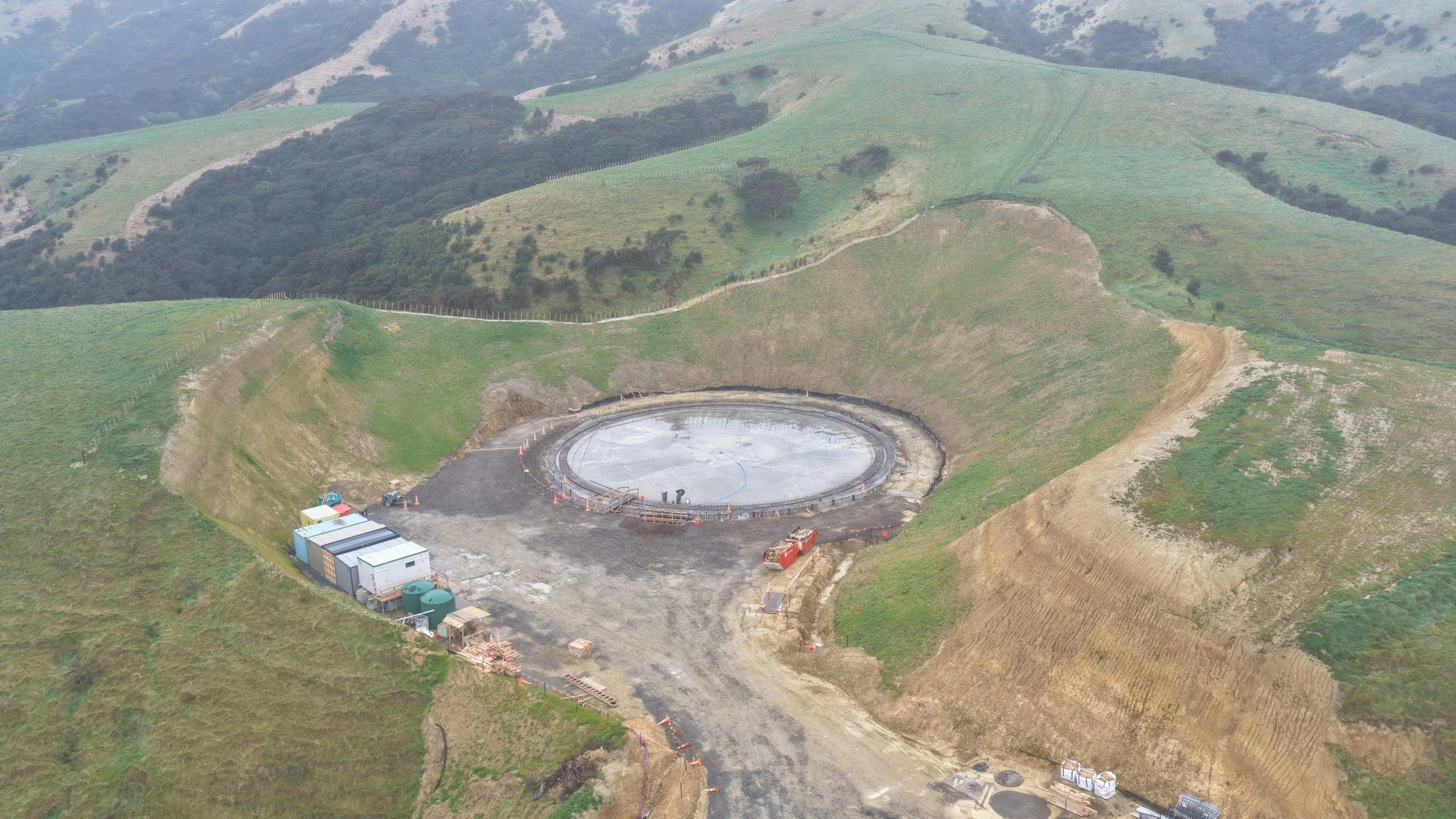
What happens next with the reservoir?
Steel tendons run through conduits inside the slab and will now be tensioned to compress the concrete and help prevent cracking. this is known as a post tensions slab.
This happens in stages and is based on how quickly the concrete gains strength.
Initial tensioning can begin once testing shows the concrete has reached around 10 MPa, with the final tensioning taking place at approximately 20 MPa — likely around a week later, depending on the test results.
the testing occurs initially with the sump tests on site when the concrete first arrives and then using cylinders which are filled using the concrete from the truck that has delivered it to the reservoir. these are cured and tested at defined intervals
With the base now complete, the next exciting step will be seeing the reservoir walls begin to rise. this month the creeper crane will be arriving assembled and then they will start bringing int he concrete panels from otaku where they have been built.
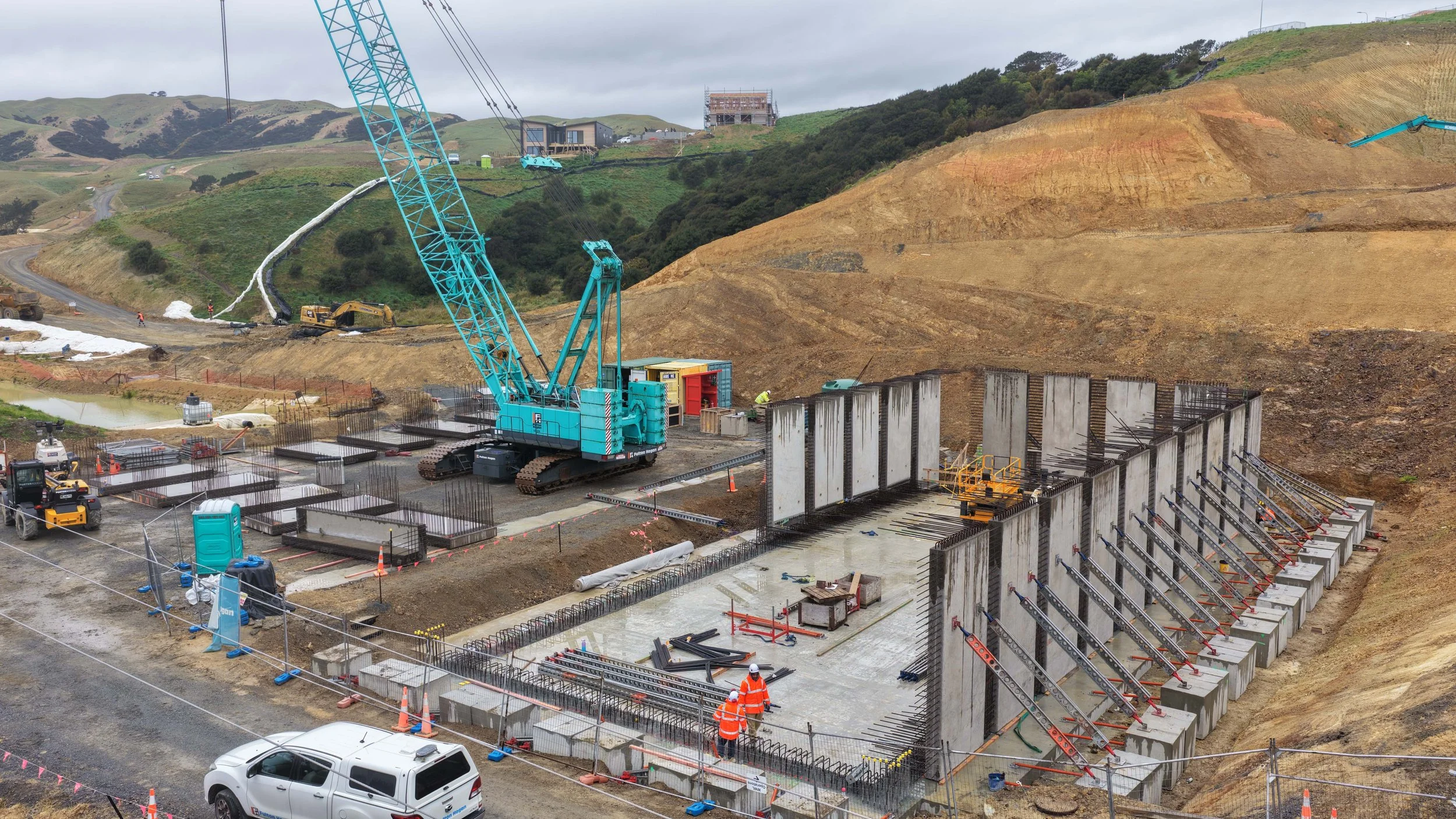
The wastewater tank starts taking shape
There’s also visible progress at the James Street entrance.
Fulton Hogan have completed the foundation for the wastewater detention tank, and the first precast concrete wall panels have now arrived on site and been lifted into place.
A crawler crane is being used to unload and position the panels, while one- and two-tonne concrete blocks around the foundation provide temporary bracing as each panel is lifted, aligned and secured.
Once complete, the tank will temporarily store wastewater and help control when flows are released into the wider network.
It’s another important piece of infrastructure needed to support the first stages of development at Plimmerton Farm.
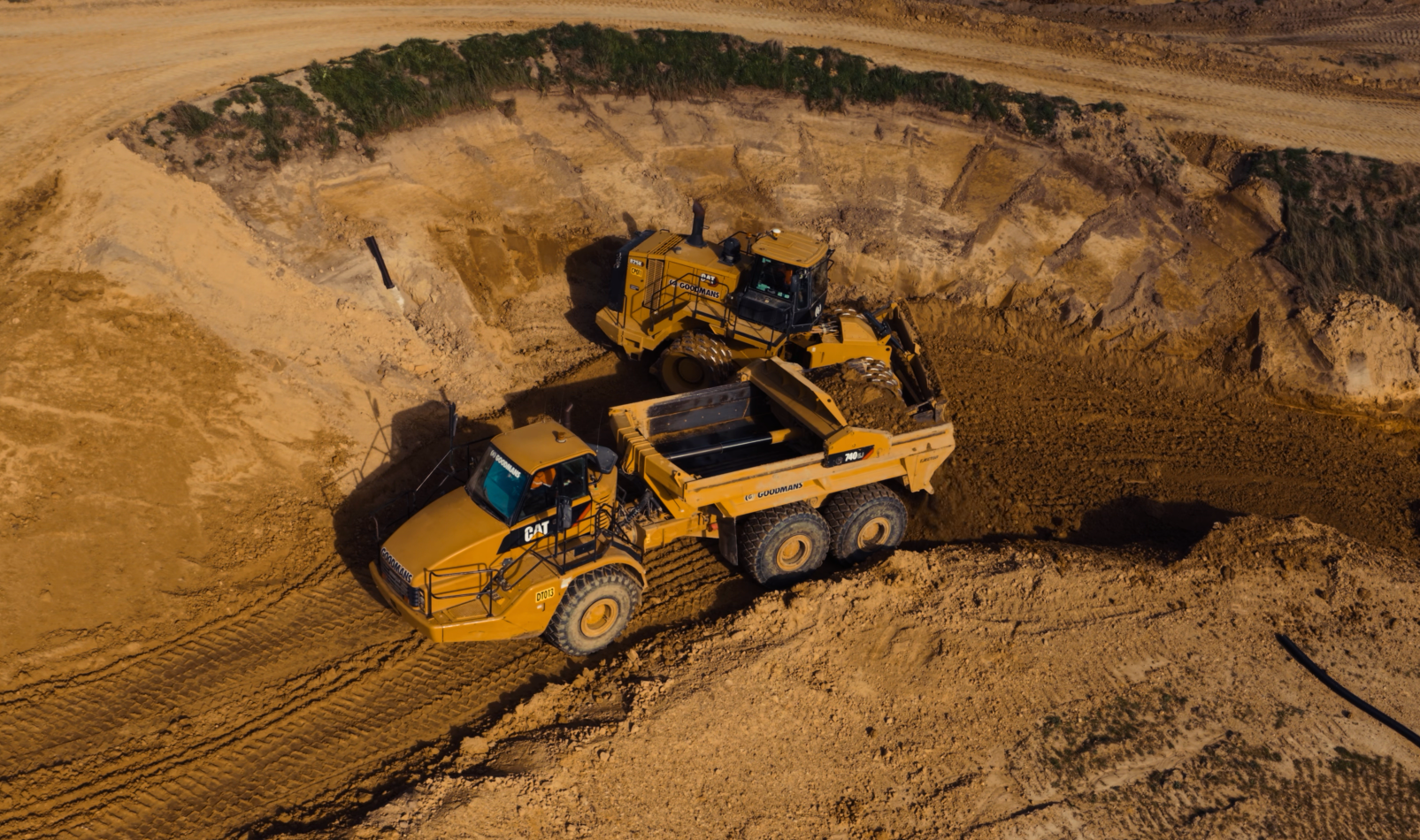
Getting ready for the next earthworks
Winter has naturally slowed some areas of the site.
Rain and cold conditions mean there are times when heavy machinery simply can’t operate without damaging the ground or creating unnecessary environmental risks. we are currently averaging about 3 days a week of earthmoving.
That doesn’t mean work stops altogether.
Construction access roads, including the steep road leading up to the reservoir, are being strengthened using suitable aggregate and compliant rock sourced from around the site.
The team has also established a sediment retention pond (SRP) beside one of the future road areas. this will be a fill site. and has been a good example of controlling run off from steep sites whilst being close to streams.
The way and SRP works is when rainwater runs off an earthworks area, it first enters a smaller forebay where the heavier material can settle. The water then moves into the main pond, where flocculant helps bind very fine particles together so they settle to the bottom.
Floating outlets then draw the clearer water from near the surface.
Putting these systems in place before the next earthworks area opens means construction can continue while helping protect the adjoining stream.
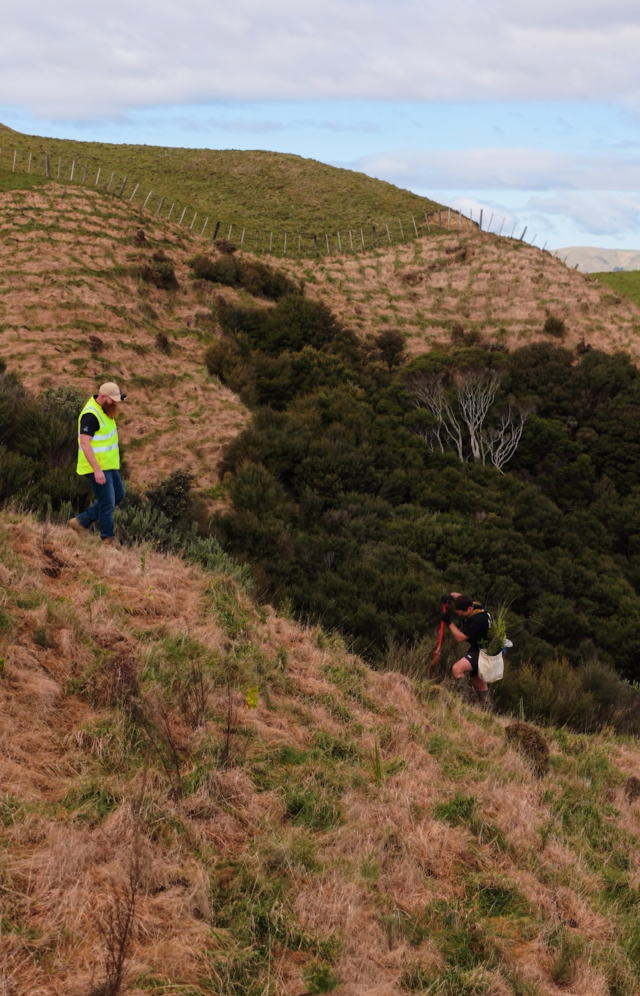
Planting 70,000 native plants
Away from the major construction activity, another team has been making steady progress across Plimmerton Farm’s gullies, hillsides and wetland areas.
70,000 native plants are being planted this season as part of retiring up top a third of the site into native bush. Some of that is offsetting, and other bits are regeneration and or establishing new native areas.
GPS is used to ensure the planting follows the boundaries set out in the ecological plans, while the species being planted have been selected because they are either already found on the property or are known to have historically grown in the area.
On the higher slopes, plants are generally spaced around 1.2 metres apart. In the wetter areas they are planted much closer together — around 800mm apart.
The tighter spacing helps the canopy close over more quickly, shading out competing grasses and creating better conditions for natural regeneration underneath.
It’s also pretty physical work.
On the steeper slopes the planting crews work sideways across the hill where they can, and plants are sometimes placed beside prepared planting spots beforehand rather than requiring planters to carry bags weighing around 25 kilograms all day.
At full pace, the team aims to get around 3,500–4,000 plants into the ground each day, four days a week.
And every hole is slightly different. Across the site the ground can quickly change from rock to topsoil and then into clay, so each planting spot needs to be properly cultivated before the plant goes in.
The plants are then firmly seated into the soil so Wellington’s wind can’t loosen them and allow the roots to dry out.
Planting is only the beginning
Getting the plants into the ground is one part of the job. Looking after them while they establish is just as important.
Planting areas were sprayed beforehand to reduce grass competition, and another round of relief spraying is planned in around four weeks to give the young natives as much space and moisture as possible heading into summer.
We’re also dealing with some of the less welcome residents of the site.
Blackberry and old man’s beard are being actively controlled because they can quickly smother young native plants.
Gorse is a little different. In suitable areas it can actually act as a useful “nurse crop”, giving young native plants some protection while they establish. Over time, the native canopy should grow above it and eventually shade the gorse out.
Simply removing stock from parts of the property is already having an impact too, with native seedlings beginning to naturally regenerate along former pasture margins.
Rabbits and hares can damage young plants, possum pressure can increase as pasture dries out, and pūkeko have a habit of pulling newly planted wetland plants straight back out of the ground.
Ongoing monitoring and trapping will help protect the planting as well as the native birds, lizards and other wildlife that will increasingly use these areas as habitat.
What you’ll see next
Over the coming weeks there should be some very visible changes across the site.
Reservoir testing and post-tensioning will continue before work moves onto the walls.
More wastewater tank panels will arrive and be lifted into position.
Earthworks towards the first housing areas will continue as ground conditions allow, supported by the new access and sediment-control systems.
And across the restoration areas, the focus will move from planting into looking after those young plants through their first summer.
After summer, the team will assess survival rates and identify any areas that need replanting.
It’s a good example of the different types of work happening at Plimmerton Farm at the same time — major infrastructure going into the ground while the long-term restoration of the property’s streams, gullies and hillsides is getting underway.
We look forward to showing you the next stage as the reservoir begins to rise, the wastewater tank takes shape and thousands of new native plants start to establish.
Thank you for following the journey. We look forward to sharing more progress with you in next month's update.
To stay up to date with the latest news and progress from Maymorn Farm, subscribe to our newsletter.