
Our Build Process
Our build process is designed to make your journey simple, transparent, and stress-free.
From your first enquiry through to final handover, we guide you every step of the way – combining clear communication, trusted expertise, and a structured, streamlined approach to bring your new home to life with confidence at every stage.
-
Building consent has been granted by council, confirming the plans meet all required building standards. With approvals in place, construction can now begin on site.
-
The project has been issued its official consent number. This is used throughout the build for inspections, documentation, and tracking progress with council.
-
The site has been scraped and levelled, a base course compacted, and a layer of sand spread to create a smooth working surface. Boxing is then installed to define the shape of the slab, ready for services and the foundation pour.
-
Plumbing and drainage that sit beneath the slab have been carefully installed. Pipes are positioned precisely by measuring from the slab boxing so they line up exactly within walls and fixtures above — accuracy here is critical before everything is covered by concrete.
-
The foundation slab has been poured. Before the concrete went down, a moisture barrier, pods to create air gaps, and reinforcing steel were installed. With the slab complete, the base of the home is now set and ready for framing.
-
External drainage and services have been connected, linking the home to water, sewer, and stormwater systems. These tie into the in-slab plumbing and connect the house to the wider network.
-
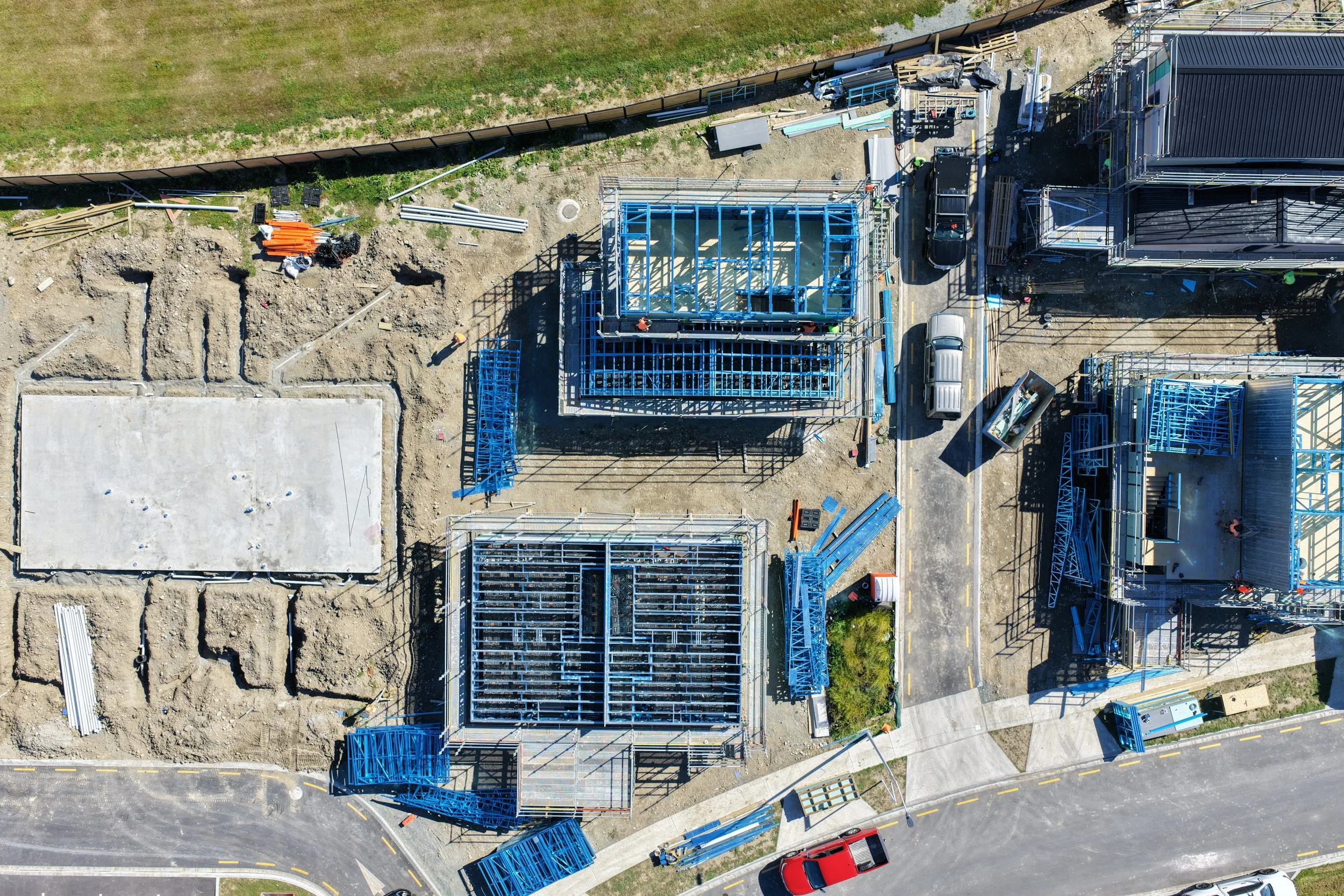
Prefabricated frames have arrived on site, ready for installation. Built off-site for accuracy, they come in straight and true, making assembly efficient and precise.
-
The ground floor framing has been erected, forming the initial structure of the home. Scaffolding is then installed to provide safe access as construction continues upward.
-
The upper level framing is now complete, forming the full structural skeleton. Safety systems such as fall protection and additional scaffold are installed so exterior and roof work can continue safely.
-
Roof trusses have been installed, locking in the roof shape and adding structural strength. This is where the overall form of the home really becomes clear.
-
Roofing materials have been installed, protecting the home from above. this is when the facia and guttering is installed.
-
The exterior has been wrapped with RAB board — a rigid air barrier that helps protect against moisture while adding strength and insulation between the frame and cladding.
-
Windows and external doors have been installed, closing in the home and letting in natural light. At this point, internal work like insulation can begin even while exterior work continues.
-
Exterior cladding has been installed, forming the outer skin of the home. This provides protection from the elements and defines the external appearance. Once complete, gutters and fascia follow, preparing for scaffold removal.
-
Electrical wiring has been run through the walls and ceilings to all switch, power, and lighting locations. This is done before linings go on so everything is hidden and ready for final fit-off later.
-
Plumbing pipework has been installed within walls and ceilings, connecting to the in-slab drainage. Like electrical, this is completed before linings so fixtures can be fitted later during second fix.
-
Wall linings have been installed, covering framing and services. This is when spaces start to feel like real rooms and the internal layout becomes much clearer.
-
The staircase has been installed, connecting the levels of the home and making access between floors permanent.
-
Walls and ceilings have been stopped with multiple coats of plaster, each applied wider and finer than the last, then sanded smooth. This creates the clean surface needed for painting.
-
Kitchen cabinetry has been installed. Benchtops are then measured on site to ensure a tight, accurate fit when installed. At this stage, the layout becomes more tangible and functional.
-
Skirting boards and architraves have been installed. These finishing details require careful cutting and fitting, especially at mitres, to achieve clean lines ready for painting.
-
Painting has been completed. A sealing coat is applied first to highlight any final imperfections, followed by additional coats to achieve a consistent finish. Trim is sprayed for a smooth finish, with walls and ceilings completed after.
-
Bathroom fixtures including showers, vanities, and toilets have been installed and connected, completing these spaces for use.
-
Switches, power points, and light fittings have been installed and connected to the wiring completed earlier. The electrical system is now operational.
-
Taps, mixers, and plumbing fixtures have been installed and connected. Water systems are now fully functional.
-
Flooring has been laid throughout the home, completing the internal surfaces and bringing all spaces together.
-
Scaffolding has been removed, revealing the exterior of the home in full for the first time.
-
Outdoor works including driveways, paths, and planting have been completed, finishing the exterior of the property.
-
Final inspections have been carried out and council has been notified the build is complete and ready for sign-off.
-
The property title has been issued, confirming legal ownership of the completed home.
-
A Code Compliance Certificate has been issued, confirming the home meets all building requirements set out in the consent.
-
Settlement has been completed and ownership has transferred. The home is now ready to be lived in and enjoyed.