End of May 2026 Updates
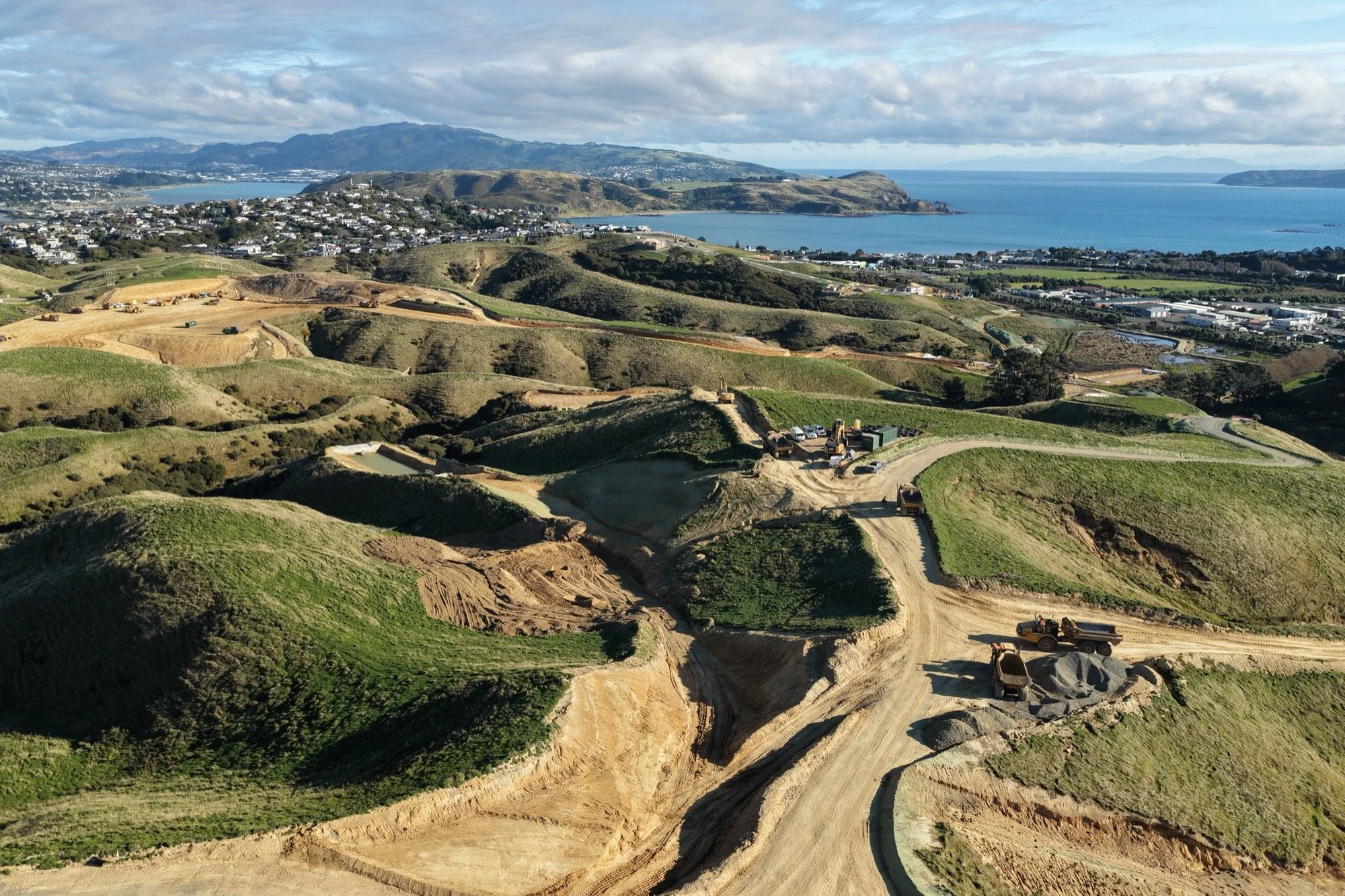
As May comes to a close, we’re pleased to share another update from Plimmerton Farm. There has been plenty happening across the site, with a strong focus on the essential groundwork that will support the future neighbourhood — from wastewater and stormwater infrastructure through to reservoir works, road access, earthworks, and environmental protection.
While much of this work is still foundational, it is also some of the most important work on the project. These are the pieces that need to be in place before the more visible parts of the community can begin to take shape.
Preparing the site for winter
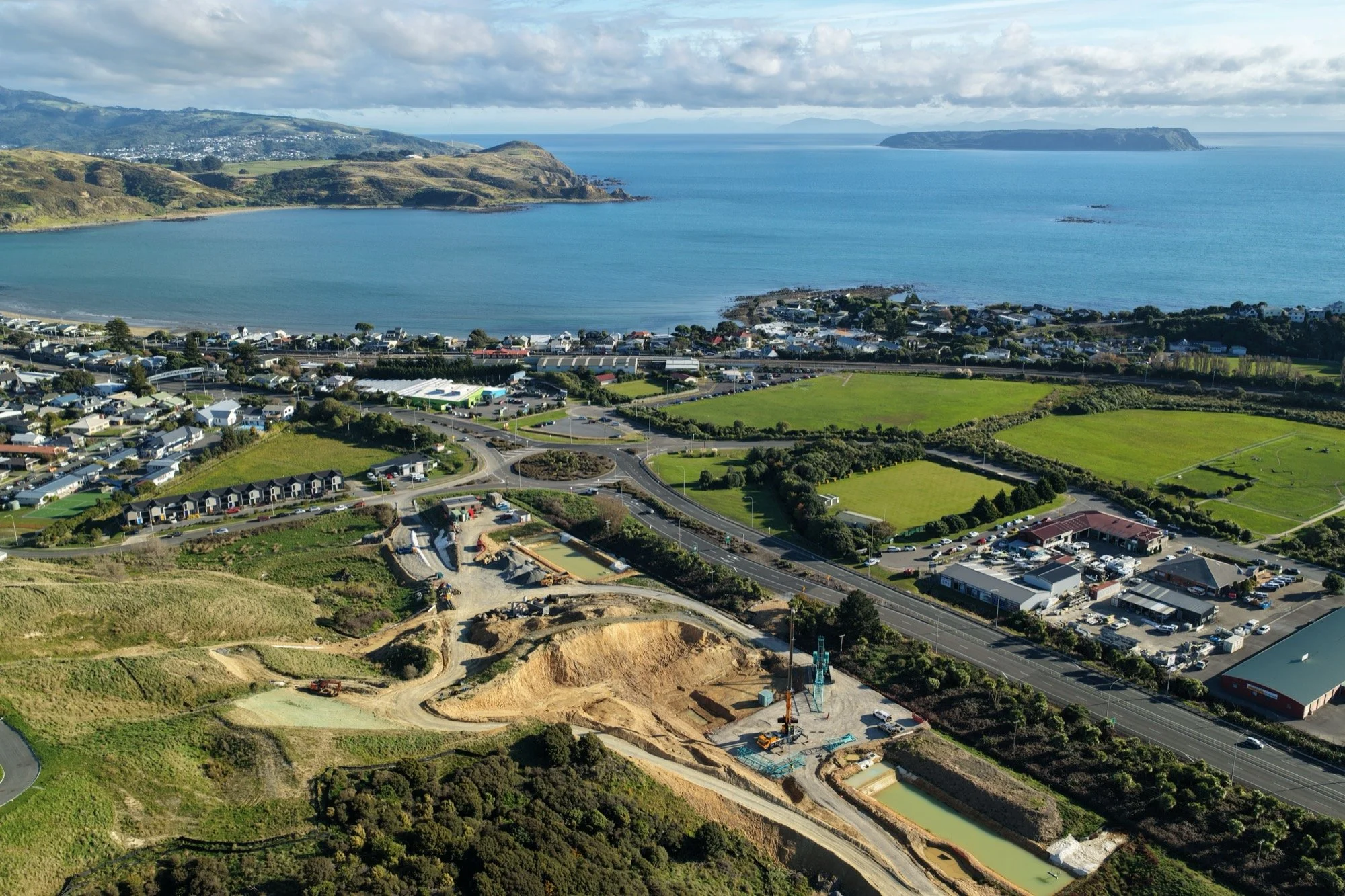
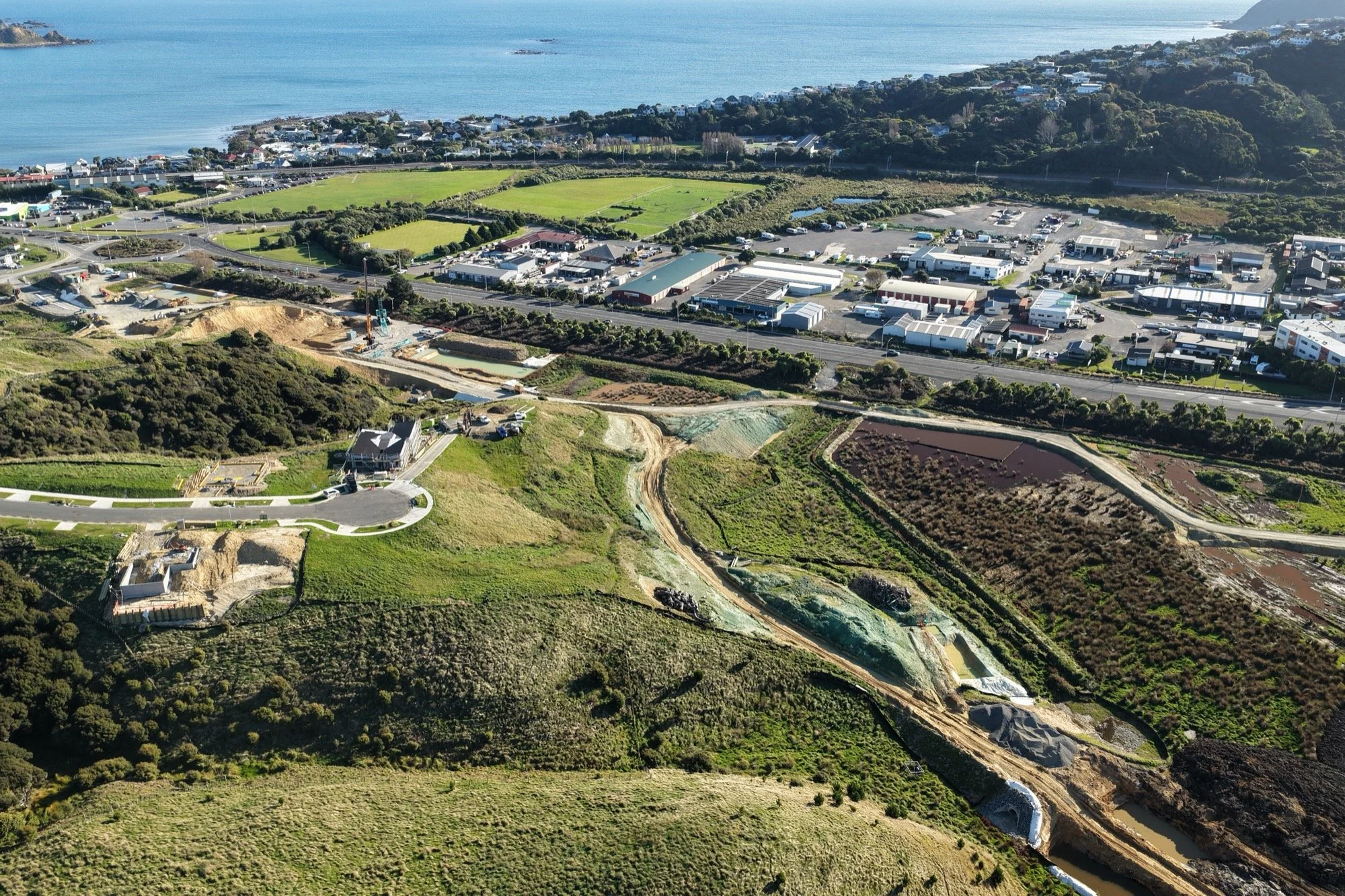
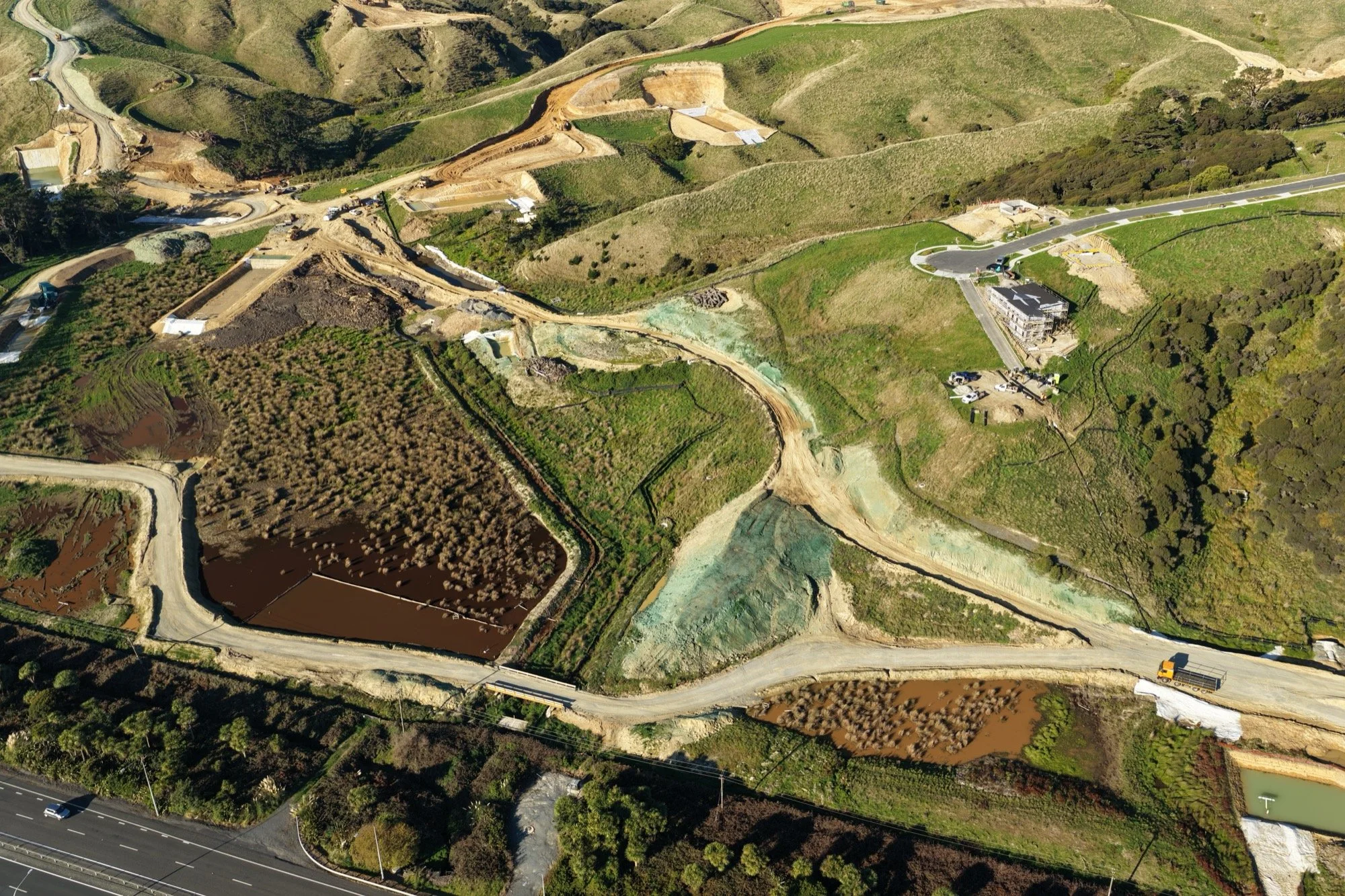
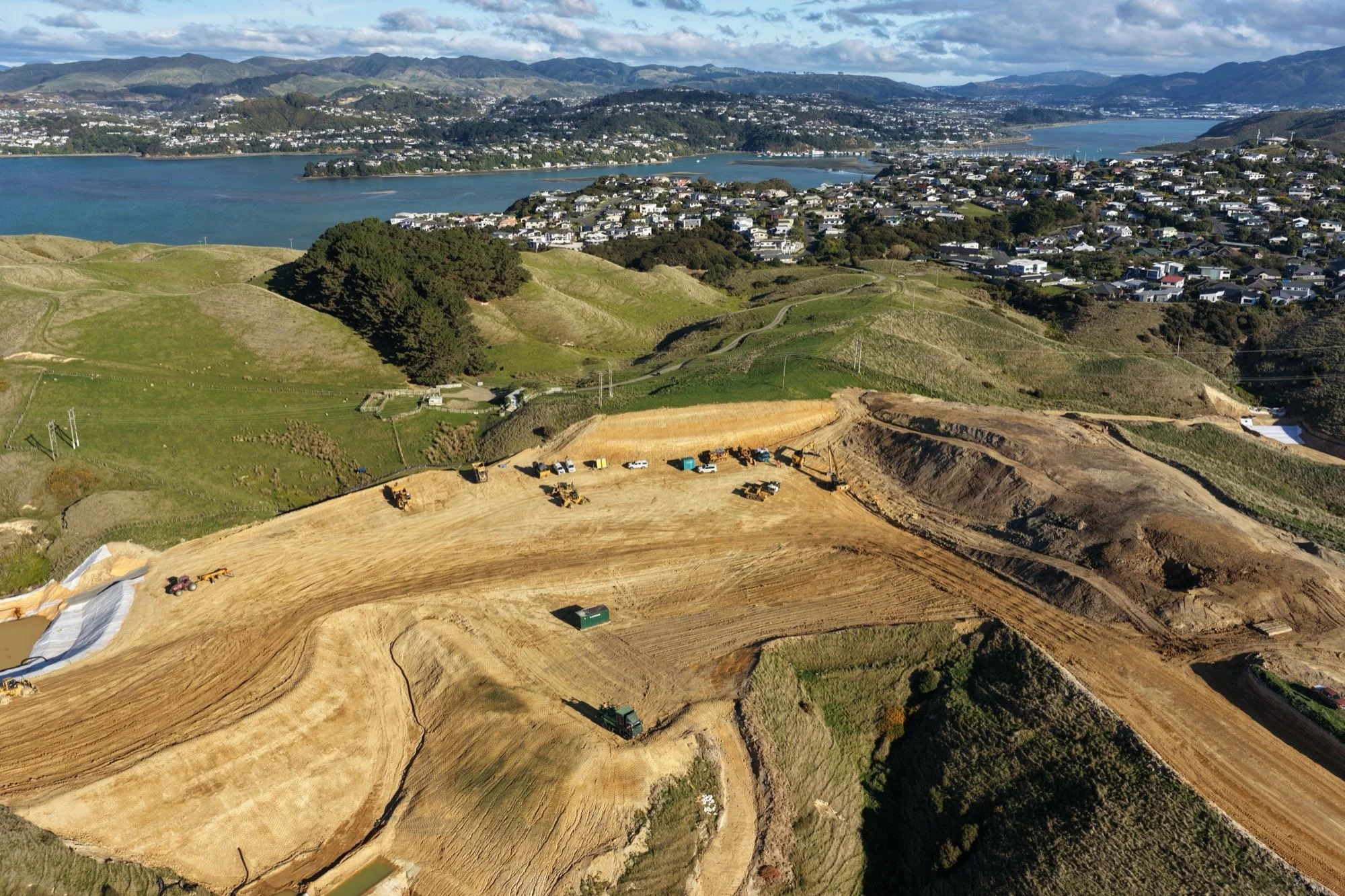
As we head into winter, a major focus across the site is stabilising earthworked areas to help prevent sediment runoff.
Two key methods being used are hay mulching and hydroseeding.
Hay mulching involves spreading a thick layer of hay across exposed ground. Large bales of subgrade hay — not quite the sort you’d feed to the cows — are broken up and blown across the site using a tracked blower unit. This creates a protective covering of around 80mm, which is then pinned into the ground using spiked rollers.
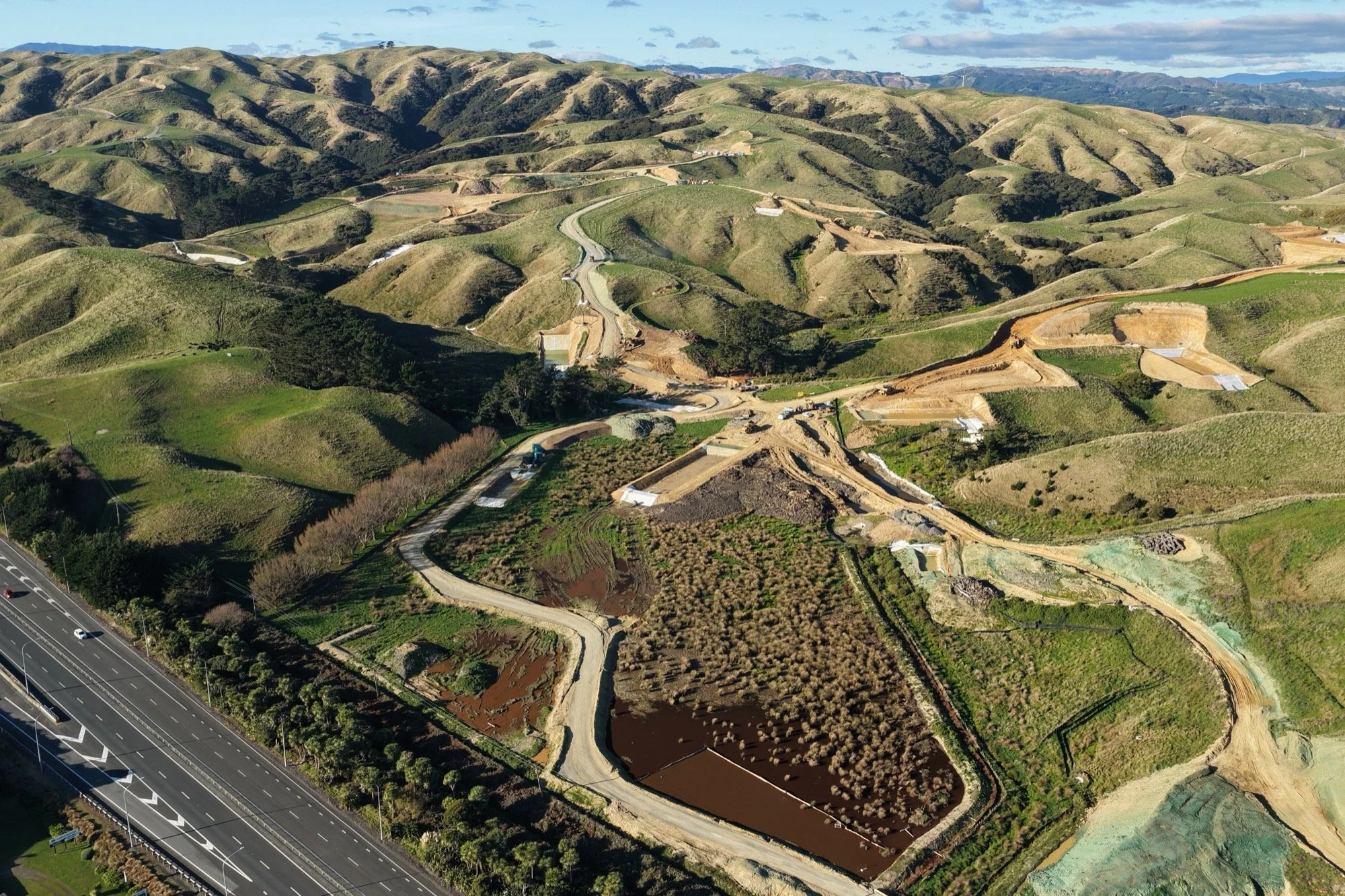
Hydroseeding is another important tool. Grass seed is mixed with paper mulch and a polymer binder, then sprayed across the ground from a large truck. You may notice large dark green areas around the site that look as though they have been spray painted. That colour comes from the dye in the hydroseed mix. The paper mulch gives the grass seed a good starting bed, helping it germinate and take hold.
Without this approach, traditionally spread seed can easily be blown away by the wind or eaten by birds, leaving uneven results — lush strips of grass in some places and bare patches in others.
Wastewater pump station works
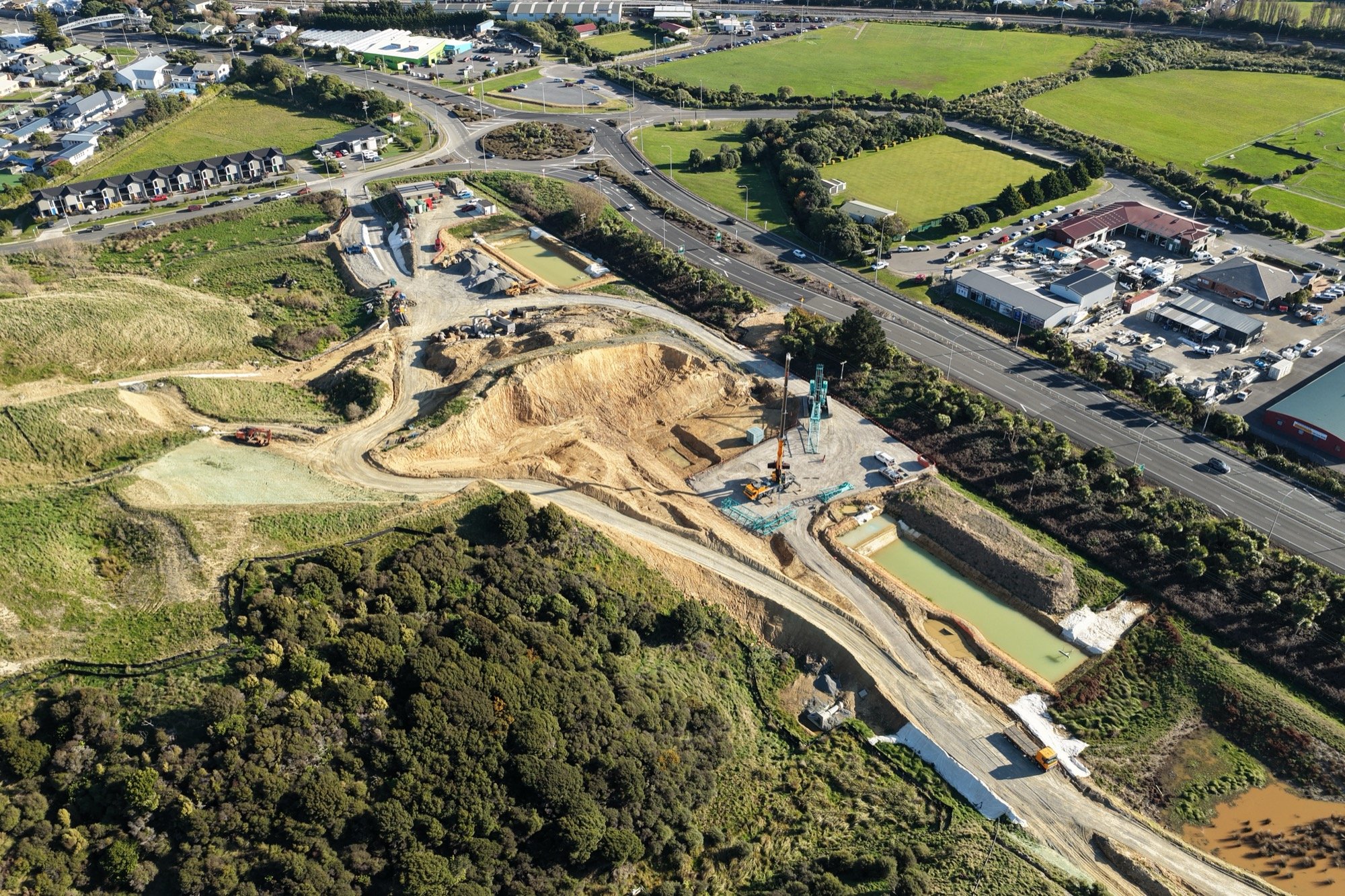
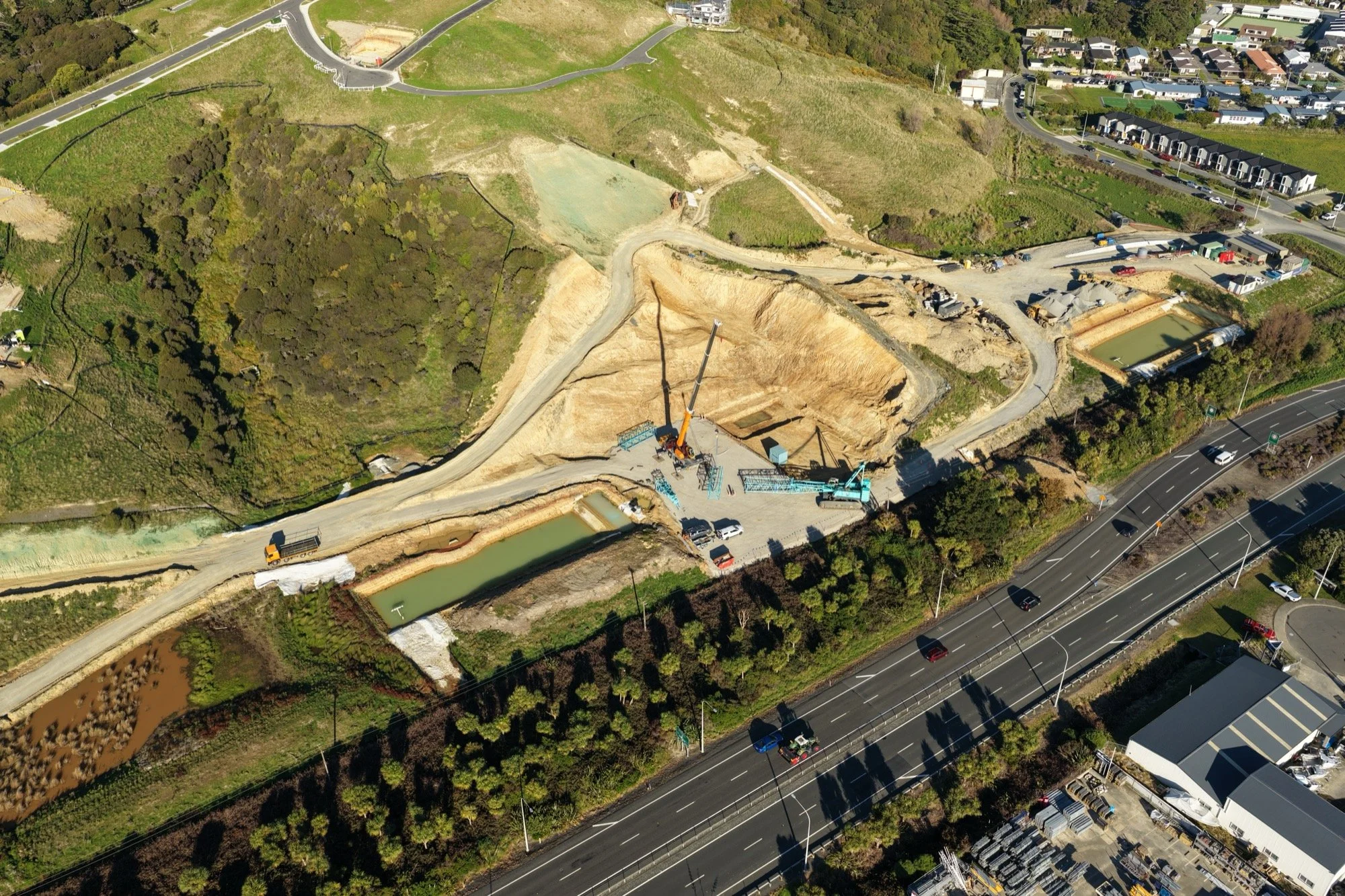
At the entrance near the James Street roundabout, you may have spotted Fulton Hogan’s large crawler crane with its lattice boom. It is an impressive piece of equipment — so large that another crane was needed just to assemble it on site.
This crane is being used to help construct the new wastewater pump station and associated storage tanks. This infrastructure will service Stage 1 of the development and provide important storage capacity.
In simple terms, wastewater from the development will be collected and stored, then pumped into the wider network during off-peak periods — typically overnight, when the rest of the community is using the wastewater system less. This helps make better use of the existing network capacity.
A key recent milestone has also been the completion of temporary wastewater diversions beneath Mo Street. These diversions were needed before construction of the new pump station could begin. They also allow earthworks and construction to progress on Road 1, which will eventually connect James Street into Plimmerton Farm.
Over the coming weeks, this area should start to look noticeably different. The last remaining cut beneath Mo Street is due to be filled, helping open up the future site entrance and giving a much clearer sense of how access into Plimmerton Farm will take shape.
Reservoir progress
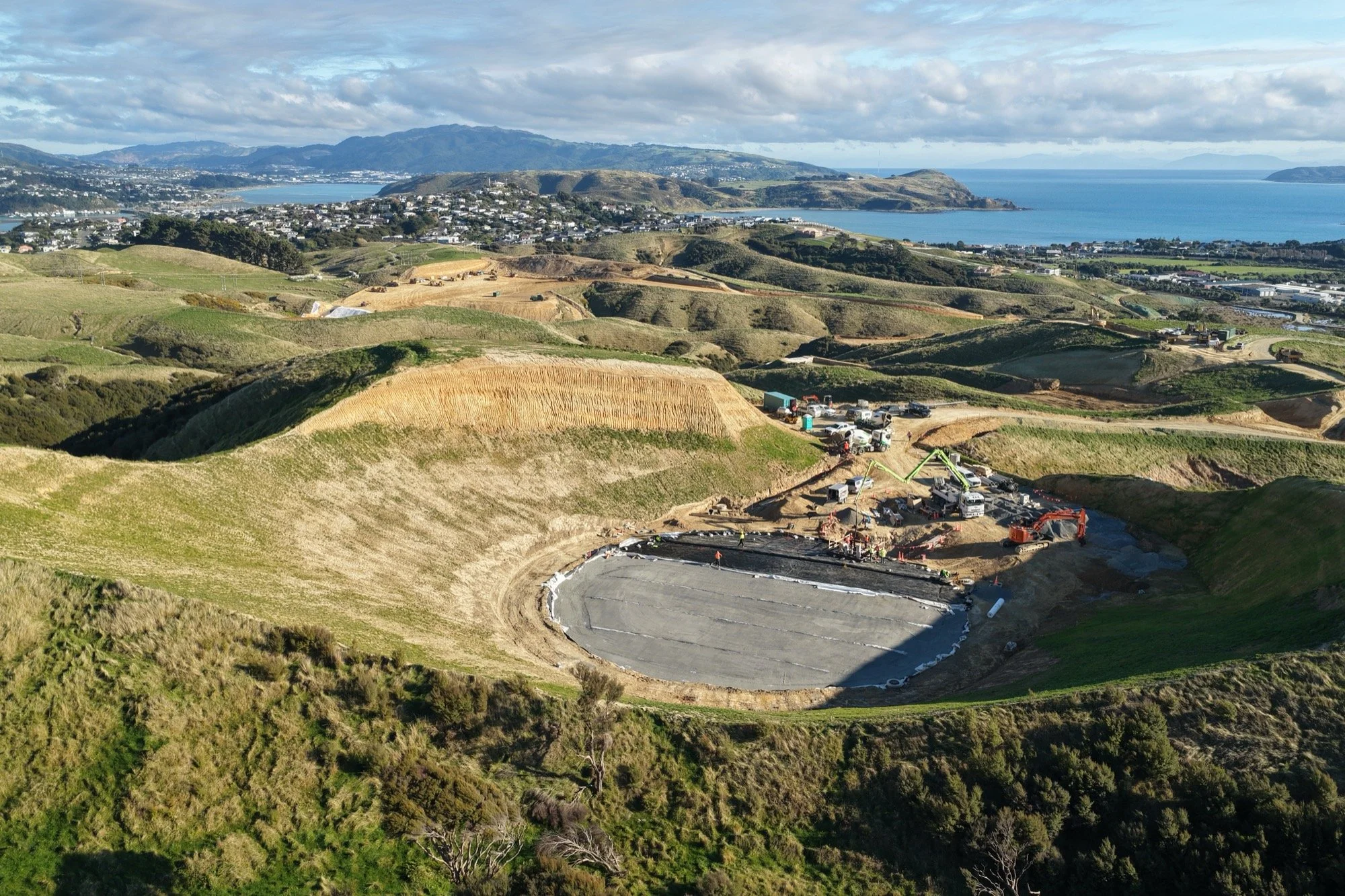
Further up the site, the reservoir area is also starting to take shape.
Preparation for the reservoir slab is well underway. The sub-base has been prepared, textile cloth has been laid, followed by HDPE, another layer of cloth, AP20, and stabilised sand — a mixture of sand and cement.
Beneath the slab, five drainage channels with collector pipes have been installed. These will help drain any leaks into an external chamber outside the slab base and act as an early warning system if cracks appear in the reservoir, either now or in the future.
The four main service pipes have also been concreted in place. These are the fill pipe, outflow pipe, overflow pipe, and scour pipe, which is used for cleaning.
The reservoir slab itself will need to be poured in one continuous operation. This will be a major job, likely beginning around 3am and continuing through the morning, with concrete trucks running circuits between the plant and the site.
Storm Recovery Works
The recent weather event required a full site response. This included repairing and reinforcing silt fences, cleaning out and maintaining sediment ponds, managing and treating stormwater runoff, and strengthening haul roads and drainage channels.
It is not the most visible part of the project, but it is essential work to keep the site stable, compliant, and progressing safely.
Roads, culverts and stormwater infrastructure
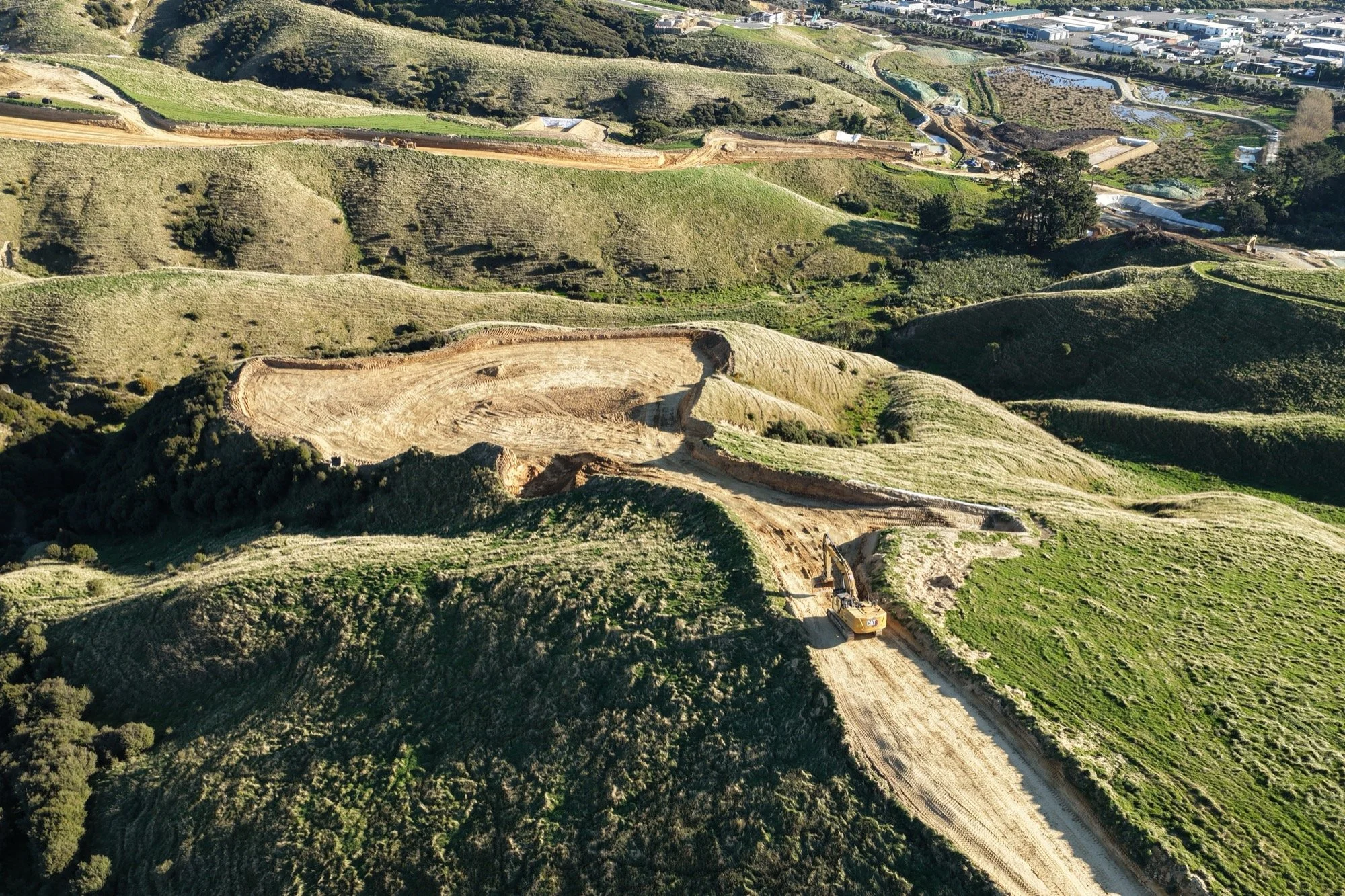
Across the wider site, stormwater and earthworks infrastructure continues to progress.
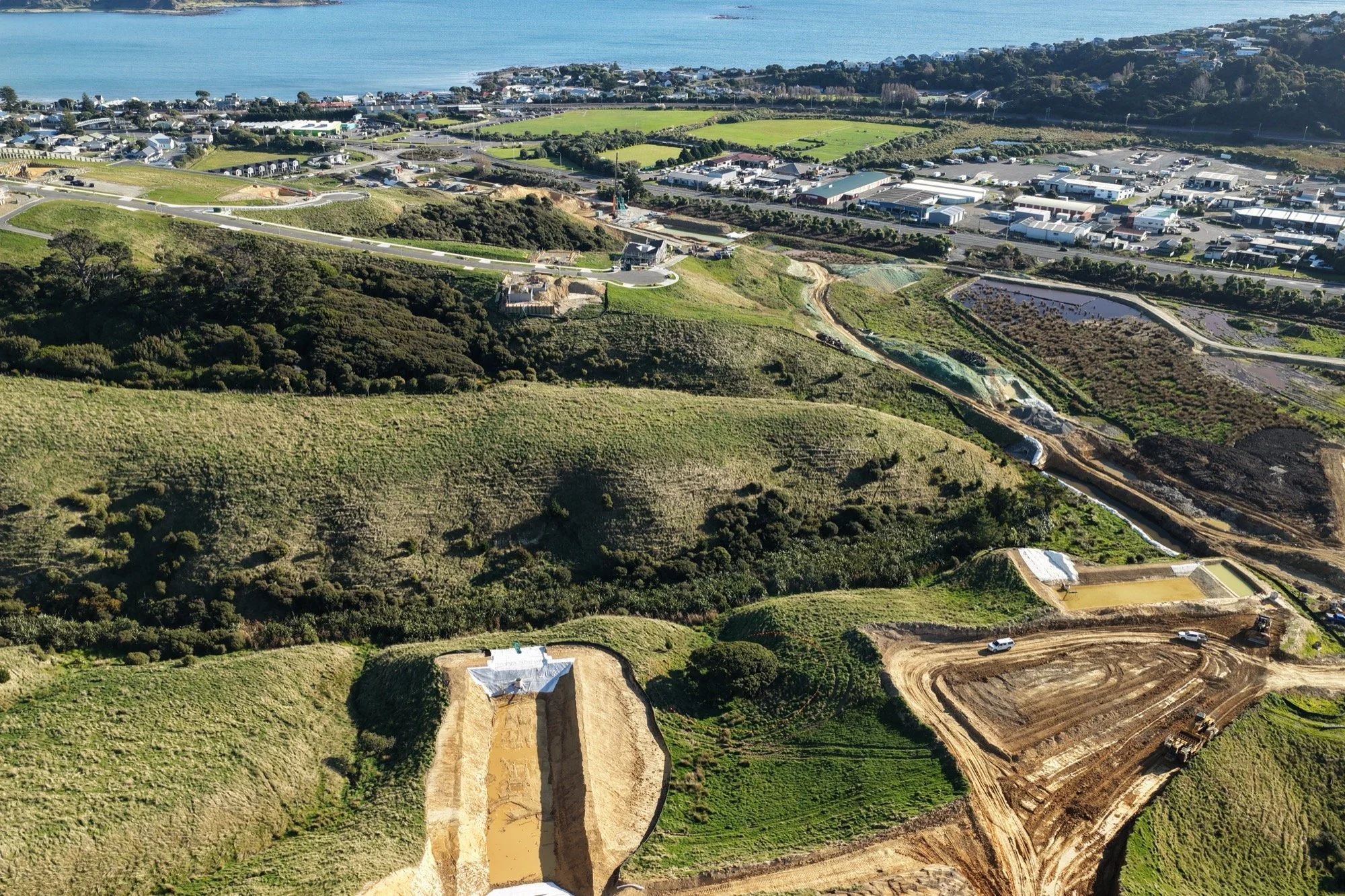
Culvert 3A is close to completion, with headwall and rip rap works still to be finished before it can be brought into operation. Once complete, fill embankment works will begin above the culverts, heading up Road 11 towards the future reservoir.
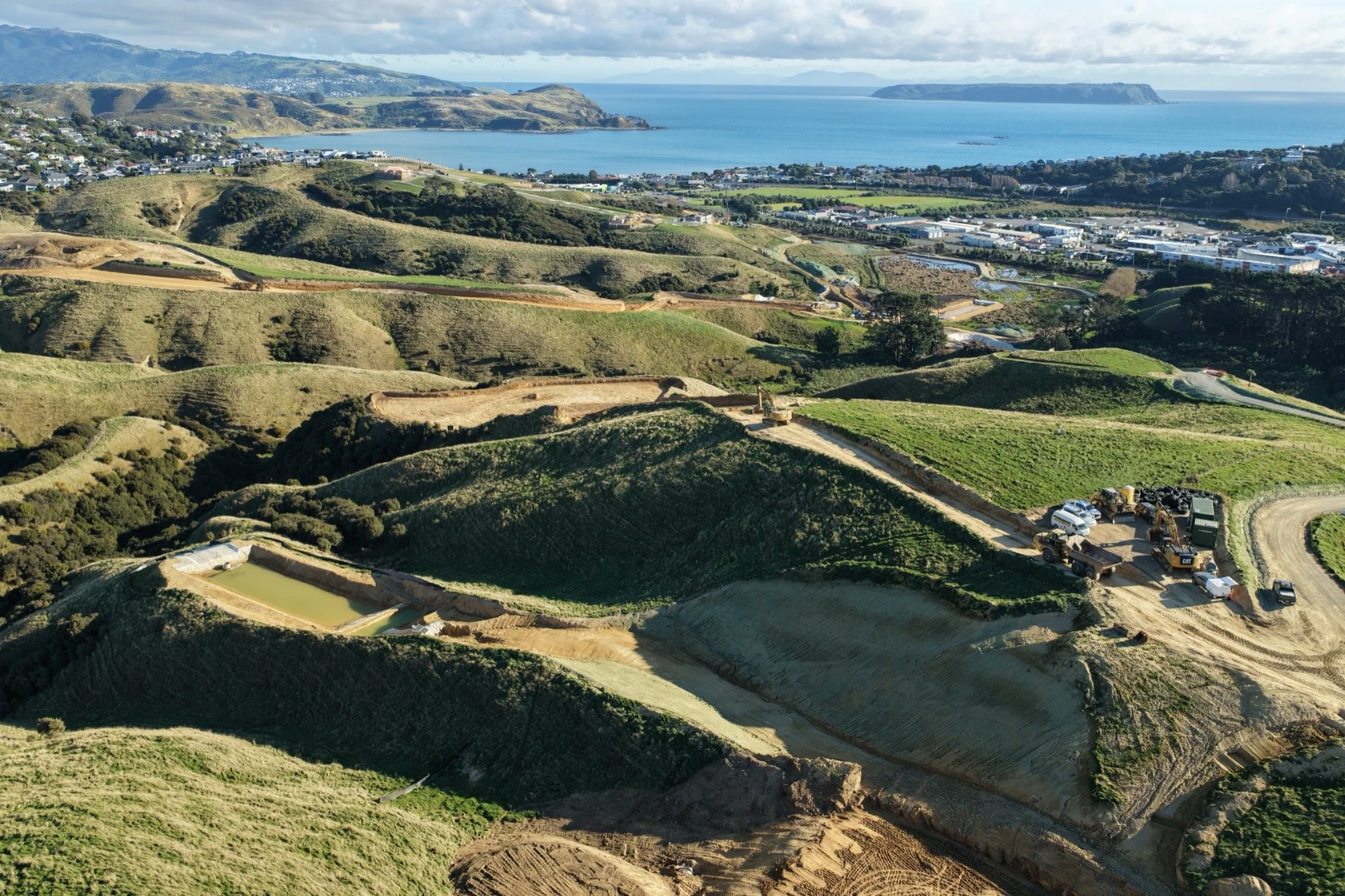
Road 11 remains an important access route, particularly for the reservoir works. Several sediment retention ponds have now been constructed in this area, allowing new fill zones to open up and earthworks to continue.
These sediment retention ponds are a critical part of managing clean and dirty water across the site during earthworks. While it may seem unusual that some of the most important earthworks areas are being completed later in the programme, this staged approach is deliberate. Work has needed to begin higher up in Zone 2 so that water runoff can be properly managed before larger fill areas are opened.
First residential lots
Progress is also continuing in the area where the first 114 lots will be located.
Earthworks in this area are moving through the required stabilisation and approval stages before the next phase can begin. This is another important step towards the future residential areas becoming more visible on site.
Environmental works
Environmental protection remains a key part of the programme.
Fencing is underway along the southern side of the 2026 planting area, pest weed control has been completed, and planting is scheduled to begin over the coming months.
Fish salvage activities are also continuing in key work areas, including around Road 1, Fill 5A and Fill 11. These activities help protect native freshwater life before works progress in and around waterways.
Weather and site conditions
The past six weeks have been helpful for the teams on site, with generally good weather and steady breezes helping keep conditions dry enough for machinery to operate effectively.
This followed the unexpected weather events at the end of March, when the site teams worked hard to maintain the site and keep things in a workable condition.
Looking ahead
Overall, there is a lot happening across Plimmerton Farm.
Much of the current work is still below the surface or focused on core infrastructure, but it is essential to the future success of the development. Roads, stormwater systems, wastewater infrastructure, earthworks, environmental protection and reservoir access all need to come together carefully before the next stages can move forward.
We look forward to sharing more progress as the site continues to change and the future Plimmerton Farm community gradually takes shape.
Thanks for following the journey, and if you know someone thinking about making a move, please have them subscribe to our newsletter and we will be able to release information on upcoming housing when it becomes available.